In Milan's clubs after Crans-Montana: "Exit lights and fire extinguishers, we'll look at that now."
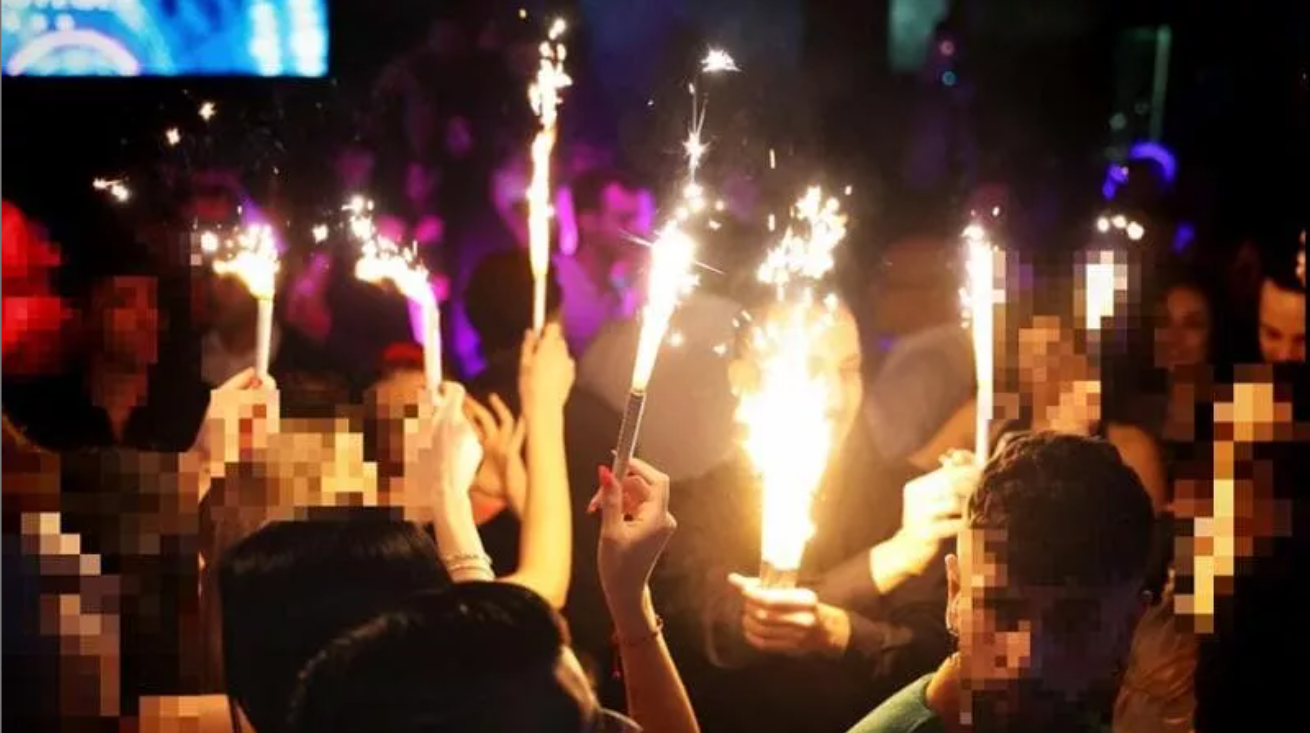
What happened at Le Constellation opened my eyes: before, when I entered a club, I only thought about having fun, now I'll be much more careful. ' Martina, 24, a publishing student, is having an aperitif with a couple of friends outside a bar in the Isola area. For her, like for many young people, the New Year's Eve massacre in Crans-Montana marked a before and after in the way she experiences nightclubs. At the table next to hers is Arianna, 23, a bank intern. 'I've always trusted these places, especially in Milan, a city full of clubs,' she says. "The massacre has added a fear: I don't think I'll never go there again, but I'll certainly make sure there are emergency exits and fire extinguishers." The young people are also concerned about the candles used inside the Swiss club. "I've seen them in a club in Santa Sofia and one in Seregno," says Davide, 27. "We need to be a little more careful about how they're used." In fact, the relevant legislation, as indicated in the ministerial decree of August 19, 1996, does not prohibit managers of public entertainment venues, such as nightclubs and theaters, from using candles, although it does prescribe measures to minimize fire risks. Furthermore, these venues are subject to periodic inspections: every three years by the Municipal Supervisory Commission and every five years by the Fire Department to renew their fire prevention certificate. "We must ensure that the conditions at the time of authorization are maintained over time: therefore, check that the emergency exits are always usable and that there are no changes to the furnishings," explains Ernesto Palumbo, regional head of the Fire Brigade. Bars and restaurants are a different story. For these establishments, pursuant to the circular of May 7, 2024, entertainment activities—such as music and dancing—are permitted "occasionally" and only if "merely ancillary" to the provision of food. Furthermore, since bars and restaurants are not included in the "List of Activities Subject to Fire Brigade Inspections," as defined by Presidential Decree 151/2011, there is no specific regular oversight body. But to ensure safety, in addition to the intervention of labor inspectors, a self-certification drawn up by the owner is sufficient.
Beyond the regulations, however, what is clear is that the way young Milanese people experience nightlife will change. And not by a little. "What happened will certainly make me make more thoughtful decisions, especially regarding underground venues, which are the ones that make me anxious right now," comments Pietro, 26. Francesca, 22, agrees: "Underground spaces have always made me feel suffocated: after Crans-Montana, I will avoid them even more."
Meanwhile, the debate on safety in clubs has also reached the schools: several Milanese schools are already working to organize courses with firefighters and online lessons. On the venue front, however, a clear signal has come from EPAM, the trade association of public establishments. "We need to make a qualitative leap by trying to foster respect and care among those who manage a venue," says Lino Stoppani, president of Epam Milano. "We will continue with the culture of prevention: on Thursday, we will organize a webinar for our members to remind them of their training and regulatory obligations."
And with the Winter Olympics approaching, some are taking action: yesterday the Municipality of Livigno, which will host the snowboarding and freestyle skiing competitions from February 5th to 21st, issued an ordinance prohibiting the use of open flames and pyrotechnics in public establishments and public spaces. The administration has imposed a fine of between seventy-five and five hundred euros for violators.
Link to the site: https://milano.repubblica.it/c...
Post a comment